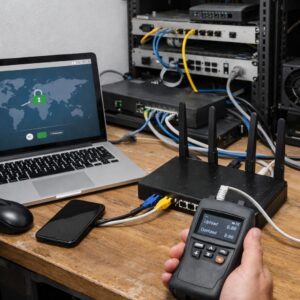
End-to-end encryption can prevent a messaging delivery service, cloud hosting provider, network intermediary, or compromised server from reading corporate conversations in plaintext. However, a secure enterprise deployment requires much more than enabling an encryption option. The organization must also verify user identities, manage cryptographic keys, secure every enrolled device, control group membership, define recovery procedures, address legal retention, and prepare for incidents involving compromised endpoints or recipients.
Define the trust model
Document which systems and participants can decrypt content, recover keys, add devices, archive messages, or authorize new group members.
Protect the endpoints
Encryption cannot protect a message after malware, an unlocked device, or an authorized recipient exposes the plaintext.
Manage the key lifecycle
Keys require secure generation, storage, distribution, rotation, recovery, revocation, expiration, and destruction.
Resolve governance first
Retention, eDiscovery, legal hold, monitoring, data loss prevention, and incident response must be designed before deployment.
What End-to-End Encryption Actually Means
In a true end-to-end encrypted conversation, message content is encrypted on an authorized participant’s device and remains encrypted until it reaches another authorized participant’s device. The delivery service may route and store ciphertext, but it should not possess the ordinary means to decrypt the message content.
That architecture is different from transport encryption. Transport Layer Security can protect a connection between the application and the provider, while the provider may still decrypt, index, search, scan, archive, or disclose the message after it reaches the service.
Comparing Common Messaging Protection Models
| Protection model | Who may access plaintext? | Operational advantages | Important limitations |
|---|---|---|---|
| Transport encryption | The sending client, receiving service, provider systems, and authorized recipients may be able to access plaintext. | Supports server-side search, malware scanning, compliance archiving, content inspection, and administrative recovery. | A compromised provider service, privileged provider account, or lawful disclosure process may expose message content. |
| Provider-managed encryption | The provider generally manages the encryption and decryption infrastructure and may hold or control relevant keys. | Simplifies administration, backups, search, retention, indexing, recovery, and integration. | It protects stored data but may not prevent the provider from decrypting content through its normal service architecture. |
| Customer-controlled encryption | Access depends on the design. The customer may control keys while the application or provider still performs some server-side processing. | Gives the organization greater control over key access, revocation, residency, and external service dependencies. | Customer-controlled keys do not automatically create E2EE. Review when and where the provider handles decrypted content. |
| End-to-end encryption | Authorized cryptographic endpoints participating in the conversation can access plaintext. | Reduces exposure to compromised delivery infrastructure and limits ordinary provider access to message content. | Server-side search, inspection, recovery, legal hold, and content monitoring may be limited or require a different architecture. |
E2EE protects content between endpoints, not from endpoints. A compromised laptop, unlocked phone, malicious recipient, screenshot, camera, copied attachment, notification preview, or authorized export can still expose information after decryption.
The Corporate E2EE Trust Chain
Begin With a Messaging Threat Model
The organization should identify the threats it expects E2EE to reduce. Without a defined threat model, teams may choose a highly private application that cannot meet business requirements or select a manageable platform that does not protect against the intended risk.
Compromised delivery service
An attacker gains access to servers, storage, backups, administrators, or cloud infrastructure supporting the messaging platform.
Account or device takeover
An attacker steals credentials, enrolls a new device, hijacks a session, or abuses an unsafe account-recovery workflow.
Malware or physical access
A compromised, stolen, unlocked, rooted, or unmanaged endpoint exposes messages after they are decrypted.
Malicious or careless recipient
An authorized user copies, forwards, photographs, exports, or intentionally discloses protected content.
Communication-pattern analysis
An observer learns who communicates, when messages are sent, group activity, device information, or approximate message size.
Missing corporate records
Required business communications become unavailable for investigation, legal hold, records management, or regulatory response.
Step-by-Step Enterprise Implementation Plan
Classify the conversations that require stronger protection
Identify discussions involving executive strategy, credentials, source code, security incidents, customer records, legal matters, payment approvals, regulated data, intellectual property, acquisition planning, or other sensitive information. Not every conversation needs the same platform, retention period, or administrative model.
Define the security and governance requirements
Document identity assurance, device ownership, permitted countries, external participants, message retention, legal hold, eDiscovery, incident investigation, audit logging, data residency, backup, recovery, accessibility, integrations, and offboarding requirements. Resolve conflicts before selecting a product.
Document the exact E2EE architecture
Identify where keys are generated, how participants authenticate one another, whether the provider can add devices, how group keys change, what the server can observe, how attachments are protected, and which components ever receive plaintext. A vendor statement saying “E2EE is supported” is not enough.
Evaluate the cryptographic protocol and implementation
Prefer documented and independently reviewed protocols rather than proprietary claims with no technical explanation. For group messaging, assess how the design supports changing membership, asynchronous participants, forward secrecy, post-compromise recovery, key updates, device removal, and protection against replay or impersonation.
Connect accounts to authoritative corporate identities
Use approved identity proofing, single sign-on, federation, and multifactor authentication where supported. Prevent users from creating unmanaged duplicate identities, and define how contractors, guests, shared functions, emergency accounts, and service identities are handled.
Approve each device as a separate endpoint
A user may access messages from a phone, desktop, browser, tablet, or secondary laptop. Inventory and authorize each endpoint rather than assuming that one approved account makes every device trustworthy. Notify users and administrators when a new device is added.
Apply managed-device requirements
Require supported operating systems, screen locks, encrypted storage, patching, malware protection, application integrity, secure boot where available, remote lock or wipe, and appropriate device-compliance policies. Decide whether personal devices are permitted and how corporate data will be separated.
Design the key lifecycle
Define key generation, storage, device transfer, rotation, renewal, backup, recovery, revocation, expiration, and destruction. Determine which keys are device-specific, user-specific, group-specific, or organization-controlled and who can authorize sensitive recovery actions.
Control group creation and membership
Restrict who can create sensitive groups, invite external users, add devices, promote administrators, or change group settings. Membership changes should cause the cryptographic state to advance so removed members cannot decrypt future messages.
Secure attachments, voice notes, and link previews
Confirm that files, images, audio, reactions, replies, message edits, deleted-message records, and thumbnails receive appropriate protection. Determine whether link previews are generated on the client or fetched by a server that can observe the destination URL.
Define the backup and recovery model
Decide what happens when a user loses every device, forgets a recovery secret, changes phones, or returns after a long absence. Recovery that is too difficult can cause permanent data loss, while recovery that is too easy can create a hidden decryption path for attackers or administrators.
Resolve compliance archiving before deployment
Determine whether messages must be retained, placed on legal hold, reviewed during investigations, or provided through discovery. Possible designs include approved endpoint capture, an explicitly authorized archive participant, user-controlled export, or limiting E2EE to communication categories without mandatory server-side retention.
Integrate the platform with security operations
Collect available identity, device-enrollment, administrator, membership, authentication, application, policy, and security events. E2EE may intentionally prevent message-content inspection, but the organization should still monitor high-risk account and device activity.
Run a controlled pilot
Test a representative group across mobile and desktop devices, employee departures, lost phones, guest collaboration, group changes, backup recovery, legal requests, connectivity interruptions, support procedures, and incident response. Document limitations before company-wide use.
Train users on the limits of encryption
Employees should understand that encryption does not validate every request, prevent screenshots, correct an incorrect recipient, stop phishing, secure an unlocked device, or replace payment-verification procedures. Sensitive actions still require independent confirmation.
Review the deployment continuously
Reassess the platform after protocol updates, provider acquisitions, new integrations, device-policy changes, security incidents, regulatory changes, new countries, major workforce changes, or introduction of artificial intelligence and automated assistants.
Key Management Is the Core Operational Challenge
Encryption is only as reliable as the key lifecycle
Corporate messaging keys should be treated as sensitive assets throughout their complete lifecycle. An organization should be able to explain how keys are created, protected, used, updated, backed up, recovered, revoked, and destroyed.
- Generate keys using approved cryptographic implementations.
- Keep private key material on authorized endpoints where intended.
- Protect keys with operating-system security and hardware-backed storage where supported.
- Rotate keys when devices, users, or group membership change.
- Revoke lost, stolen, replaced, or untrusted devices promptly.
- Prevent old recovery codes and unused device keys from remaining valid indefinitely.
- Protect backup keys separately from ordinary account passwords.
- Record sensitive administrative recovery and device-enrollment events.
- Test key destruction and account termination instead of assuming they work.
Forward Secrecy and Post-Compromise Security
Forward secrecy is intended to reduce the effect of a future key compromise on past messages. Post-compromise security is intended to help a conversation recover after previously compromised key material is replaced and the group advances to a new cryptographic state.
These properties depend on the protocol and its implementation. They also require endpoints to delete obsolete key material and update keys correctly. An offline, compromised, or unmaintained device can extend the period during which an attacker retains access.
The IETF’s Messaging Layer Security protocol defines an efficient asynchronous group key-establishment mechanism for groups ranging from two participants to large communities. MLS includes mechanisms for evolving group membership, forward secrecy, and post-compromise security. It is a protocol component, not a complete enterprise messaging product, and the surrounding identity, delivery, application, storage, and policy systems still require evaluation.
Identity Verification and Device Enrollment
Corporate identity controls
- Use an authoritative employee and contractor directory.
- Apply strong authentication to account access and recovery.
- Restrict unmanaged local accounts where possible.
- Record role changes, suspension, and termination events.
- Require additional approval for high-risk account recovery.
- Notify the existing user when credentials or devices change.
- Remove inactive guest and contractor identities automatically.
- Review privileged messaging administrators separately.
Cryptographic device verification
- Display every device authorized for the account.
- Alert users when a new cryptographic endpoint appears.
- Support device or key verification for sensitive contacts.
- Show whether a participant’s identity key has changed.
- Remove lost and replaced devices from active groups.
- Prevent silently enrolled devices from reading future messages.
- Require reverification after important identity changes.
- Document how browsers and temporary sessions are treated.
Group Membership and Employee Offboarding
Group messaging is more complex than encrypting a one-to-one conversation. Every membership change can affect who possesses the current group secrets. The platform should provide a clear record when a member or device is added, removed, replaced, or reverified.
- Restrict who can create confidential groups
- Require approval before inviting external participants
- Display the organization and identity of every guest
- Notify members when a participant or device is added
- Advance the group’s cryptographic state after membership changes
- Prevent removed members from decrypting future messages
- Remove former employees from all groups and enrolled devices
- Revoke sessions, credentials, tokens, and recovery methods
- Review downloaded files and local data after departure
- Preserve required records through an approved legal process
Removing a participant cannot erase information that the person already viewed, copied, photographed, exported, or decrypted on an authorized device. Offboarding reduces future access but does not retroactively eliminate every earlier copy.
Choosing a Backup and Recovery Model
No central recovery
The provider and organization cannot restore message keys when every authorized device and recovery secret is lost. This minimizes additional decryption paths but creates permanent data-loss risk.
User-controlled encrypted backup
The user protects a backup with a recovery secret or trusted device. Security depends on the strength, storage, rotation, and support process for that recovery method.
Organization-controlled recovery
The enterprise maintains an authorized recovery capability. This can support continuity and retention but introduces another trusted decryption path that requires strict governance and auditing.
The selected model should reflect the sensitivity of the conversations, records obligations, tolerance for permanent data loss, administrator trust, incident-response needs, and likelihood of lost devices.
E2EE, Legal Hold, and Corporate Records
Do not promise both absolute provider blindness and unrestricted server-side compliance access
A system cannot keep message content unavailable to every server while also allowing an ordinary server process to search, inspect, archive, classify, or produce the same plaintext on demand. A compliant design must state which approved endpoint or recovery mechanism performs those functions.
- Define which conversations are official business records.
- Identify applicable retention and legal-hold requirements.
- Decide whether an archive service becomes an explicit conversation endpoint.
- Document when approved endpoint capture is permitted.
- Protect archived copies with access control, encryption, and audit logging.
- Separate message retention from account and device recovery.
- Prohibit undisclosed administrative bypasses or hidden participants.
- Explain the model clearly to employees and authorized external users.
Adding an approved archival participant does not necessarily mean that messages travel unencrypted. It changes the participant set and trust model because the archive becomes another endpoint authorized to receive plaintext. That design should be explicit, limited, monitored, and protected as carefully as any other privileged system.
Data Loss Prevention and Malware Scanning
Traditional server-side data loss prevention and attachment scanning may not be able to inspect content that remains end-to-end encrypted. The organization may need to shift selected controls toward managed endpoints, approved sending workflows, destination restrictions, secure file services, classification labels, or user confirmation.
| Control objective | Traditional server-side approach | Possible E2EE-compatible approach | Residual limitation |
|---|---|---|---|
| Malware detection | The provider scans the attachment after it reaches the service. | Scan before encryption on a managed endpoint and again after decryption on the receiving endpoint. | Coverage depends on endpoint health, application integration, and current detection capabilities. |
| Sensitive-data detection | A cloud service inspects text and files for policy matches. | Use endpoint DLP, approved file-transfer services, warning prompts, data classification, and recipient controls. | Authorized users may still photograph, rewrite, or disclose information outside inspected workflows. |
| Retention | The provider stores searchable plaintext or provider-decryptable copies. | Use an approved archive endpoint, managed-device capture, or explicit export process where legally appropriate. | The archive creates an additional protected repository and trusted recipient. |
| Investigation | Administrators search message content centrally. | Use authorized endpoint evidence, preserved exports, metadata, audit events, and approved recovery procedures. | Content may be unavailable when no authorized copy or recovery mechanism exists. |
Metadata Can Remain Visible
E2EE primarily protects message content. Depending on the architecture, delivery systems and network observers may still learn information needed to route messages or operate the service.
The IETF MLS specification notes that some group identifiers, message lengths, frequency information, and other fields can remain observable depending on how the delivery service and application are designed. Organizations handling highly sensitive communication should evaluate metadata exposure separately from content encryption.
Attachments, Notifications, and Link Previews
A platform can advertise encrypted text while handling related content differently. Review the complete message experience rather than testing only a short text conversation.
- Confirm that attachments receive separate strong encryption
- Review thumbnail and preview generation
- Check whether file names and sizes remain visible
- Determine who fetches external link previews
- Disable sensitive message previews on locked devices
- Review push-notification content and metadata
- Test message edits, reactions, replies, and deleted-message records
- Review voice messages, screen captures, and shared location data
- Confirm how exported files are protected after download
- Prevent personal cloud backup of corporate message databases
Endpoint Controls That Support E2EE
| Endpoint control | Security purpose | Important limitation |
|---|---|---|
| Full-device encryption | Helps protect locally stored message databases and keys when a powered-off device is lost or stolen. | It may not protect content while the user is signed in and the device is unlocked. |
| Screen lock and biometrics | Reduces casual physical access to an active messaging endpoint. | Weak recovery methods, shared credentials, or malware can bypass the intended protection. |
| Mobile and endpoint management | Enforces supported versions, application policy, device compliance, storage protection, and remote response. | Remote wipe cannot guarantee deletion from a device that remains offline or from copies previously exported elsewhere. |
| Application data separation | Limits movement between corporate and personal applications, storage, accounts, and backup services. | Screenshots, cameras, manual transcription, and authorized sharing may remain possible. |
| Endpoint detection and response | Helps identify malware, persistence, credential theft, and unusual device behavior. | It does not guarantee that every compromise is detected before plaintext is exposed. |
| Remote lock or wipe | Supports response when an enrolled corporate device is lost, stolen, reassigned, or associated with a departing employee. | The command requires the device to receive and execute it, and it cannot erase screenshots or copies sent elsewhere. |
Pilot Deployment Example
A phased rollout for legal, security, and executive teams
A business can begin with a limited group whose communication has a clear confidentiality need and whose records requirements have already been reviewed.
Confirm protocol design, device model, group membership, key recovery, provider access, and integration boundaries.
Enroll managed devices, verify users, restrict personal backups, and test new-device notifications.
Test group changes, lost-device recovery, guest access, attachments, weak connectivity, and employee departure.
Validate support, incident response, legal requests, available logs, user training, and documented limitations.
Expansion should occur only after the organization confirms that the platform protects the required conversations without creating unacceptable gaps in continuity, legal obligations, accessibility, or incident response.
Incident Response for a Compromised Messaging Account
Recommended response sequence
- Identify the affected user, devices, groups, sessions, recovery methods, and approximate compromise period.
- Revoke active sessions and remove unauthorized or untrusted devices.
- Reset account credentials and review multifactor and recovery changes.
- Advance or replace affected cryptographic keys where the platform supports it.
- Remove the compromised endpoint from sensitive groups and verify current membership.
- Preserve identity, device, enrollment, administrator, membership, and available messaging audit events.
- Determine which conversations, files, groups, and recipients may have been exposed while the endpoint was authorized.
- Inspect the affected device for malware, persistence, copied files, tokens, screenshots, exports, and other account compromise.
- Assess legal, privacy, contractual, customer, insurance, and regulatory notification duties with qualified professionals.
- Re-enroll the user through a verified process and document the control improvements required after the incident.
Rotating keys after an incident can protect future messages, but it cannot make an attacker forget plaintext or key material already obtained. The investigation should therefore identify the likely compromise window and the data accessible during that period.
Questions to Ask a Messaging Provider
- Is E2EE enabled by default, optional, or limited to selected conversation types?
- Which message, attachment, call, and collaboration features are covered?
- Where are encryption and decryption performed?
- Can the provider or administrator access plaintext through ordinary operations?
- Can the provider silently add a device, participant, or recovery key?
- Which protocol and cryptographic libraries are used?
- Does the design provide forward secrecy and post-compromise security?
- How are participant identities and devices authenticated?
- How are group additions, removals, and key updates handled?
- What metadata is visible to the delivery service?
- How are attachments, previews, notifications, and backups protected?
- What happens when every authorized device is lost?
- Does the organization or provider maintain a recovery capability?
- Which audit logs remain available without exposing message content?
- How are legal hold, retention, export, and eDiscovery supported?
- Can personal devices or consumer backups be blocked?
- How quickly can a lost device or departing user be removed?
- What independent security reviews cover the protocol and implementation?
Common E2EE Deployment Mistakes
A secure connection to the provider does not prove that the provider cannot decrypt stored or processed messages.
The organization may later discover that required legal hold, retention, or investigation processes cannot be supported.
Strong cryptography cannot compensate for unsupported phones, weak screen locks, personal backups, or malware-infected computers.
A help desk that can easily bypass identity checks may allow an attacker to enroll a new endpoint and receive future messages.
Former employees, contractors, guests, and replaced devices can remain trusted when groups are not reconciled and keys are not updated.
Message exports, databases, screenshots, and attachments can leave the protected environment through ordinary device backup features.
Application restrictions can reduce casual copying but cannot stop every camera, external device, malicious endpoint, or manual transcription.
Communication relationships, timestamps, message frequency, devices, and network information may remain visible even when content is secure.
Delayed session revocation and device removal can give an unauthorized user continued access to new messages.
A fraudulent payment or credential request remains fraudulent even when it arrives through an encrypted conversation.
Enterprise Deployment Checklist
- Identify the conversations and data categories requiring E2EE
- Document the threat model and expected security benefits
- Define retention, legal hold, investigation, and recovery obligations
- Confirm the difference between transport encryption and true E2EE
- Document every system or participant capable of decrypting content
- Review the protocol, implementation, and independent security evidence
- Connect users to authoritative corporate identities
- Require strong authentication for access and account recovery
- Approve and inventory each phone, computer, browser, and tablet
- Apply patching, storage encryption, endpoint security, and screen locks
- Define key generation, rotation, backup, recovery, and revocation
- Notify users when devices, keys, or group members change
- Restrict group creation, external invitations, and administrative roles
- Protect attachments, voice notes, previews, notifications, and exports
- Block unapproved personal backup and file-sharing services
- Review available metadata, logs, alerts, and administrative evidence
- Test employee departure, lost devices, compromise, and legal requests
- Train users on phishing, recipient verification, and encryption limits
- Verify the deployment through a controlled pilot
- Schedule recurring reviews after material platform or business changes
Frequently Asked Questions
Does E2EE prevent the messaging provider from reading every type of data?
It should prevent ordinary provider access to protected message content when correctly designed, but the provider may still process account information, routing data, timestamps, device details, message size, group activity, and other metadata. Feature coverage also varies, so attachments, backups, previews, and integrations require separate verification.
Is customer-managed encryption the same as E2EE?
Not necessarily. Customer-managed keys can provide valuable control, but the service may still decrypt content on a provider-operated server. E2EE depends on where encryption and decryption occur and which systems possess the necessary keys.
Can administrators recover E2EE messages?
That depends on the recovery design. Some platforms provide no central recovery, some use user-controlled encrypted backups, and others add an organization-controlled recovery mechanism. Every additional recovery path changes the trust model and must be protected and audited.
Can a business perform eDiscovery on E2EE messages?
It may be possible through an explicitly authorized archive endpoint, approved endpoint capture, preserved exports, or another documented mechanism. A server cannot perform ordinary plaintext search when it never receives the content or a decryption capability.
Does E2EE stop phishing and impersonation?
No. It protects the confidentiality and integrity of communication between recognized cryptographic endpoints. A compromised account, unsafe device enrollment, malicious authorized user, or deceptive request can still cause fraud. Sensitive actions require independent verification.
Can deleted encrypted messages be recovered?
Recovery depends on the platform, recipient devices, backups, legal holds, exports, notification history, and retention design. Deleting a message from one device does not guarantee that every recipient, backup, archive, screenshot, or exported copy has been removed.
Does remote wipe guarantee that corporate messages are gone?
No. A wipe command may help when the device receives and executes it, but it cannot guarantee deletion from an offline or compromised device or remove copies already photographed, exported, forwarded, or backed up elsewhere.
What is Messaging Layer Security?
Messaging Layer Security, standardized in RFC 9420, is an IETF protocol for efficient asynchronous group key establishment. It supports group membership changes, forward secrecy, and post-compromise security. A complete messaging service still needs identity, delivery, storage, application, device, and governance components.
Should every corporate conversation use E2EE?
Not automatically. Apply a risk-based approach. Some communications benefit strongly from provider-blind confidentiality, while others require centralized search, workflow automation, monitoring, or formal records retention. The organization may use different approved communication modes for different purposes.
Final Takeaway
Implementing end-to-end encryption for corporate messaging is an architectural and governance decision, not a single application setting. The organization must know who the cryptographic endpoints are, how their identities are verified, where keys are stored, how groups change, what metadata remains visible, and what happens when a device is lost or an employee leaves.
A strong deployment combines a reviewed protocol with managed endpoints, reliable identity controls, secure key recovery, transparent group membership, tested incident response, and an honest plan for retention and legal obligations. E2EE can substantially reduce exposure to compromised infrastructure, but only when every endpoint and operational process is treated as part of the security boundary.
Official Technical Resources
- RFC 9420: The Messaging Layer Security Protocol
- Signal: Official Protocol Documentation
- Matrix.org: End-to-End Encryption Implementation Guide
- NIST SP 800-57 Part 1 Revision 5: Recommendation for Key Management
- NIST SP 800-63B-4: Authentication and Authenticator Management
- NIST SP 800-124 Revision 2: Enterprise Mobile Device Security
- NIST SP 800-207: Zero Trust Architecture
- NIST SP 800-61 Revision 3: Incident Response Recommendations
This article is provided for general informational purposes and does not constitute legal, privacy, cryptographic, cybersecurity, or compliance advice. Messaging protocols, encryption coverage, administrative capabilities, recovery models, audit features, and regulatory requirements vary by provider, product, deployment, and jurisdiction. Verify important requirements using current official documentation and qualified professionals.

The TMPCom Editorial Team creates practical, research-based content about business telecommunications, VoIP systems, network security, compliance, and telecom cost management. Our articles are developed using official documentation, technical standards, and reputable industry sources to help businesses make clearer and more informed technology decisions.